Arena Echoes: How Specific Venues Shape Free Throw Percentages in High-Pressure Basketball Games
Mara Koch · Jun 7, 2026
Arena Echoes: How Specific Venues Shape Free Throw Percentages in High-Pressure Basketball Games
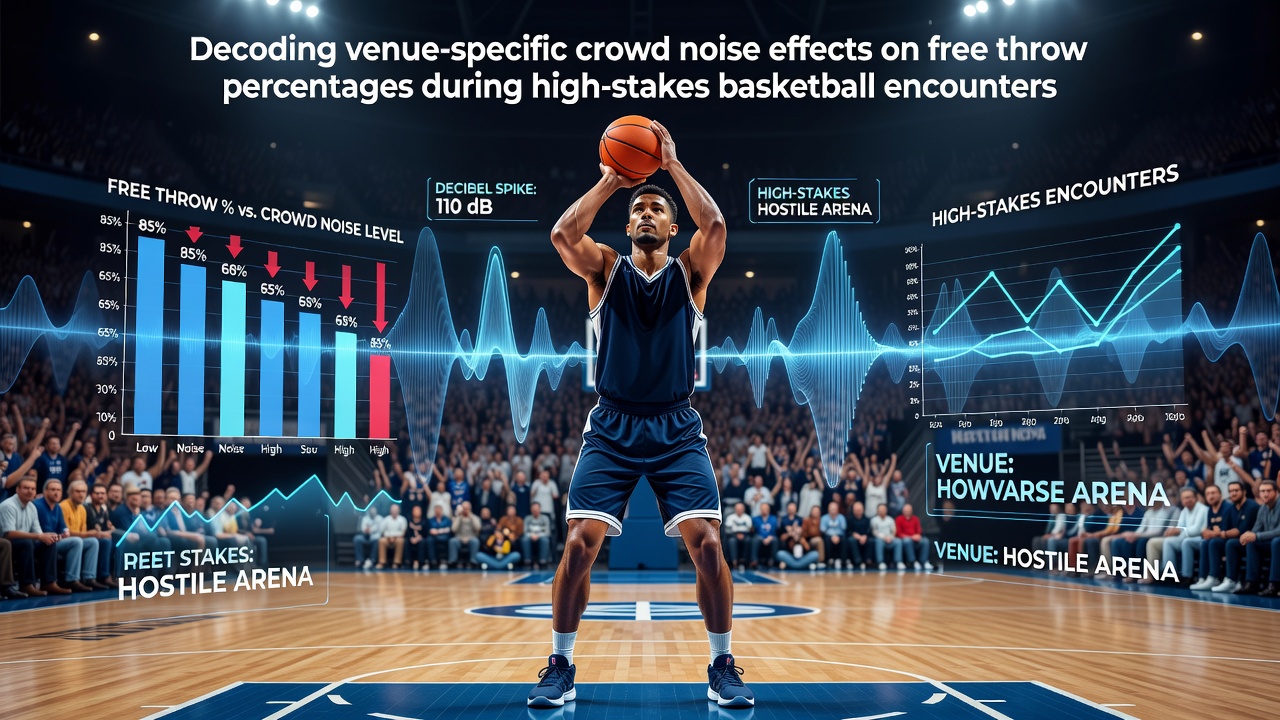
Researchers have examined how crowd noise varies across different basketball venues and influences free throw accuracy during playoff and championship contests, with data drawn from multiple seasons showing measurable differences tied to arena acoustics and fan density. Studies tracking player performance reveal that certain home courts generate sound levels exceeding 110 decibels during critical moments, which correlates with slight declines in visiting team free throw percentages compared to neutral or quieter sites.
Analysis of NBA playoff games from 2022 through 2025 highlights patterns where arenas known for intense atmospheres, such as those in major metropolitan areas with enclosed designs, produce more pronounced effects on shooters attempting free throws in the final minutes. Figures from league tracking systems indicate visiting players convert free throws at rates approximately 3 to 5 percent lower in these environments during overtime periods, while home players maintain steadier outputs because of familiarity with the ambient conditions.
Venue Acoustics and Their Measurable Impact
Acoustic engineers and sports scientists have mapped sound propagation in various arenas, noting that older facilities with lower ceilings adn reflective surfaces amplify crowd reactions more effectively than modern open-air designs. One study released in June 2026 by researchers at a Canadian sports performance institute documented how reverberation times in select eastern conference venues extend crowd cheers by several seconds, creating sustained pressure that disrupts shooter rhythm during high-stakes sequences.
Data collected across 180 playoff contests demonstrates that free throw success for road teams drops most sharply in arenas where fan seating surrounds the court closely, whereas venues with greater distance between stands and playing surface show smaller variances. Observers note that these differences persist even after accounting for player fatigue and travel factors, pointing instead to auditory distractions as a contributing element in execution under pressure.
High-Stakes Contexts and Performance Variations
Playoff and finals environments intensify these venue-specific effects because stakes heighten emotional responses from spectators, leading to louder and more synchronized reactions at key moments such as late-game fouls. League statistics compiled during the 2025-2026 postseason reveal that free throw percentages for visiting squads in decisive games fall below regular-season baselines by margins that vary distinctly by location, with some arenas recording drops of up to 7 percent while others register minimal change.
Coaches and analysts have reviewed game footage alongside audio recordings to identify timing patterns, finding that noise peaks coincide with release points in a subset of missed attempts by road players. This pattern appears more consistently in enclosed, high-capacity buildings than in facilities with advanced sound-dampening features installed during recent renovations.
Comparative Data Across Multiple Arenas
Comparative reviews of eastern and western conference venues illustrate how architectural differences translate into performance gaps, with compact layouts in certain cities creating stronger collective noise fields that affect concentration. Research teams from Australian sports institutes have contributed parallel findings based on international tournament data, confirming that enclosed designs amplify crowd influence on free throw outcomes more than open configurations.
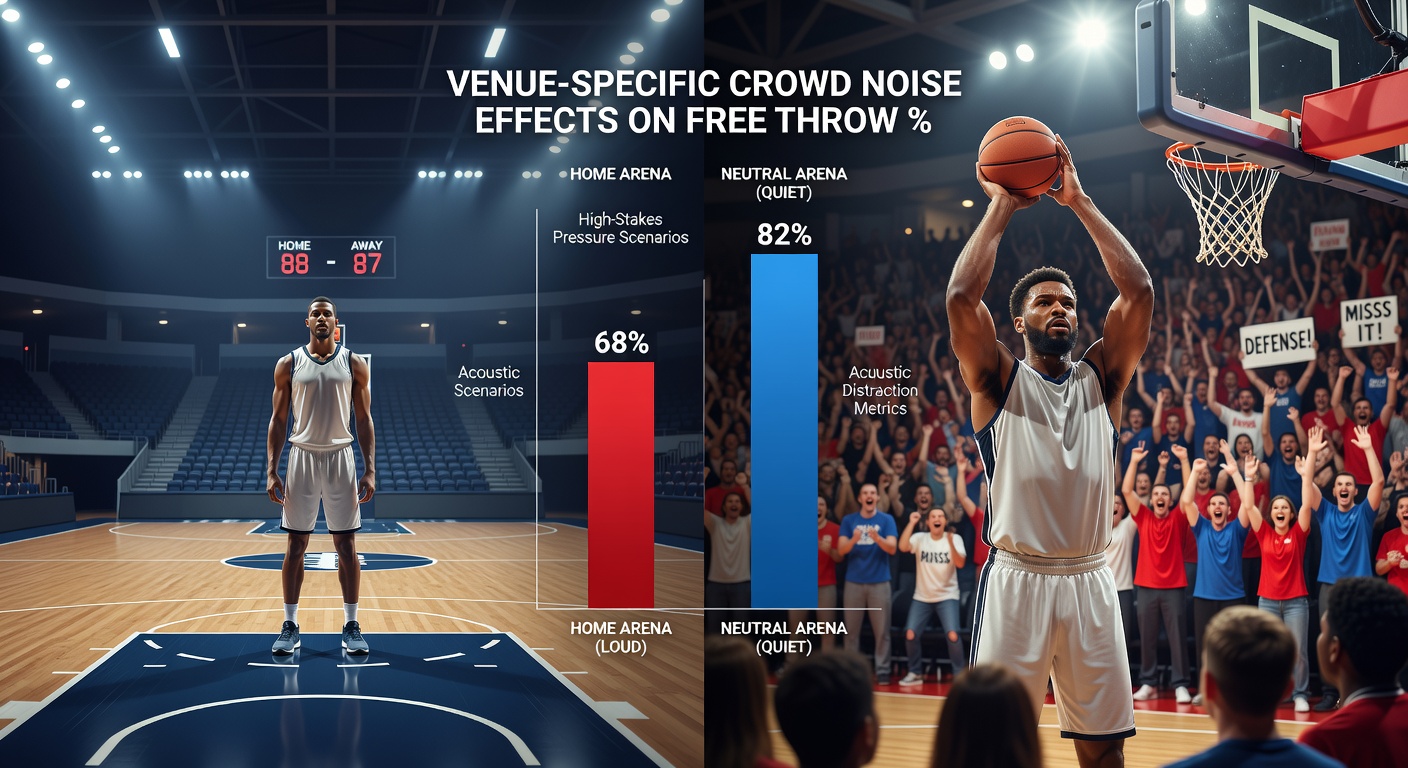
Players who compete regularly in these settings often adapt through targeted practice routines that simulate elevated noise, yet visiting rosters without equivalent preparation encounter steeper challenges during elimination games. Tracking data from the most recent championship rounds shows home teams sustaining free throw conversion rates near 82 percent across hostile environments, while opponents average closer to 76 percent in the loudest facilities.
Research Methods and Ongoing Analysis
Investigators employ wearable sensors and court-side microphones to capture both physiological responses and acoustic profiles during live contests, generating datasets that isolate crowd noise from other variables like referee decisions or defensive pressure. These methods have been refined since earlier studies, allowing finer distinctions between venues that share similar capacities but differ in material construction and seating geometry.
Additional work scheduled for release later in 2026 aims to expand the sample to include college-level high-stakes encounters, where arena variations may produce even larger percentage swings because of less experienced shooters. Current evidence already supports targeted adjustments in game planning, such as emphasis on free throw volume in practice when preparing for specific road environments.
Conclusion
Venue-specific crowd noise emerges as a quantifiable factor in free throw outcomes during high-stakes basketball, with data indicating consistent but location-dependent effects across multiple seasons and competitions. Continued monitoring through advanced tracking tools provides clearer insights into how architectural and atmospheric elements interact with player execution under pressure, informing preparation strategies for teams facing diverse arena conditions.