Fixture Congestion Patterns and Their Influence on Successive Match Results in Diverse Sports Leagues
Greta Neumann · Jul 10, 2026
Fixture Congestion Patterns and Their Influence on Successive Match Results in Diverse Sports Leagues
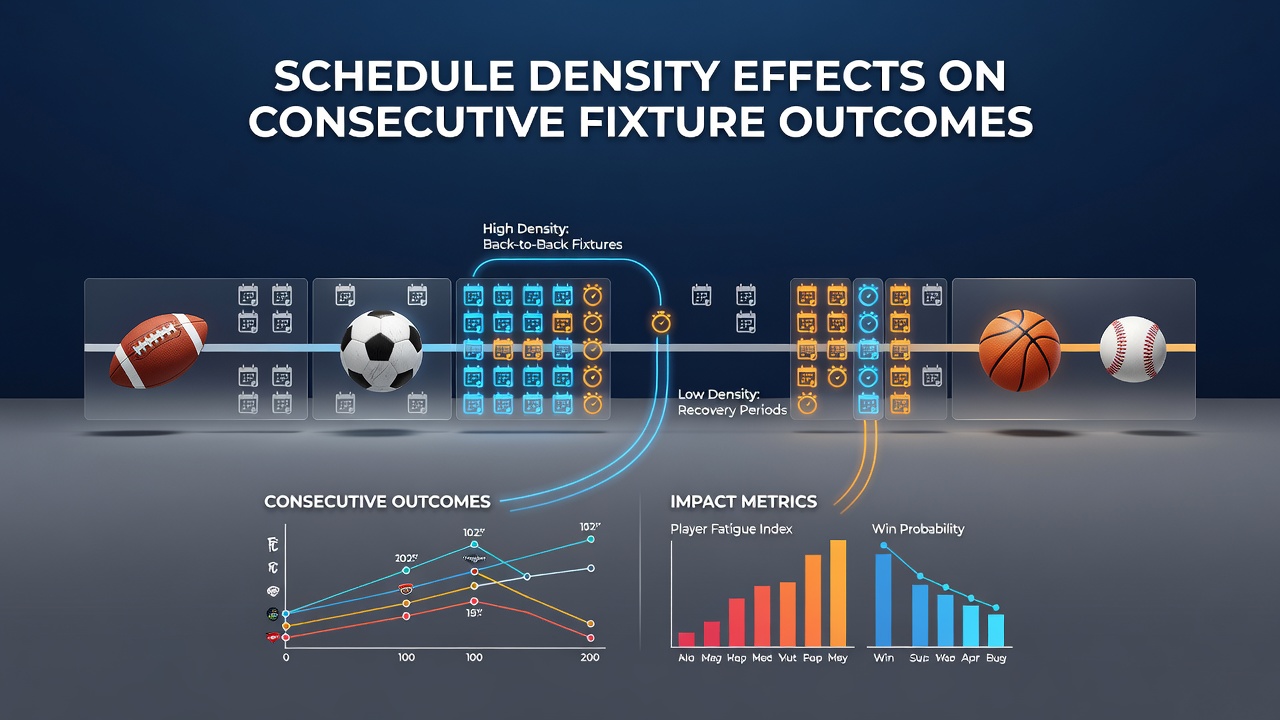
Schedule density in multi-sport leagues creates measurable shifts in team and athlete performance during consecutive fixtures, with data from various professional competitions revealing consistent patterns tied to recovery intervals and travel demands. Researchers tracking outcomes across basketball, soccer, hockey, and baseball leagues note that shorter rest periods between games often correlate with altered win rates, scoring margins, and injury incidences.
Defining Schedule Density in Professional Contexts
Schedule density refers to the concentration of fixtures within limited time frames, a factor that intensifies during league expansions, international tournaments, and playoff stretches. Observers note that leagues operating multiple sports under shared organizational structures, such as collegiate conferences or Olympic preparatory cycles, experience amplified effects because athletes frequently transition between disciplines with overlapping calendars. Data collected through 2025 and into July 2026 shows increased fixture clustering in summer months when cross-sport events coincide with domestic seasons.
Analyses from the National Collegiate Athletic Association indicate that teams facing three or more contests in a seven-day window display reduced field goal percentages in basketball and lower passing accuracy in soccer compared to squads with extended recovery windows. These trends hold across gender divisions and conference levels, pointing to physiological load rather than isolated variables.
Performance Metrics in Back-to-Back and Triple-Header Scenarios
Consecutive fixtures produce distinct statistical signatures that researchers quantify through expected points models and workload tracking systems. In basketball leagues, back-to-back games yield an average drop of 4.2 points in offensive efficiency according to longitudinal datasets maintained by university sports science programs, while defensive rebounding rates remain relatively stable. Hockey organizations report similar decrements in shot volume during the second game of a back-to-back pair, particularly when travel exceeds 500 miles between venues.
Soccer competitions reveal subtler yet persistent effects, with teams playing midweek league matches followed by weekend fixtures recording fewer high-intensity runs per player. Figures compiled by the Australian Institute of Sport demonstrate that a rest gap of under 72 hours elevates soft-tissue injury reports by approximately 18 percent across monitored professional squads during the 2025-2026 campaign.
Cross-Sport Comparisons and Shared Physiological Factors
Multi-sport environments allow direct comparison of density effects because athletes often compete in overlapping schedules. Baseball pitchers exhibit elevated earned-run averages following three consecutive days of high-pitch outings, whereas position players maintain batting averages more effectively due to lower cumulative loading. Researchers at Canadian universities studying combined hockey and lacrosse programs found that athletes transitioning between the two sports within 48 hours post-competition show measurable declines in reaction time and grip strength metrics.
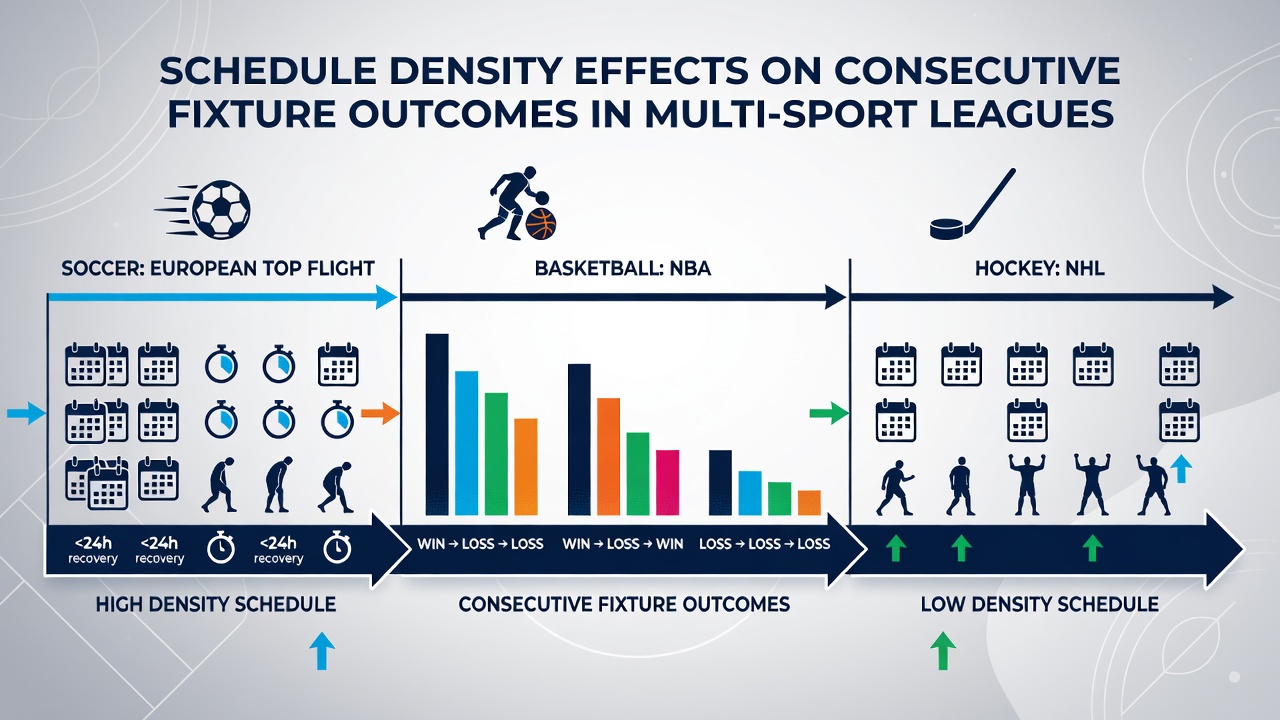
What's notable is how these patterns interact with environmental variables such as climate and venue altitude. Studies tracking European handball and basketball double-headers during July 2026 events highlighted greater performance variance when matches occurred in high-temperature conditions without adequate cooling intervals. Data from the same period indicates that leagues implementing mandatory rest protocols saw narrower margins in consecutive outcomes compared to seasons without such measures.
Recovery Protocols and Scheduling Adjustments
Leagues have responded to density-related findings by experimenting with adjusted calendars and player rotation guidelines. The International Olympic Committee published guidelines in early 2026 recommending minimum rest thresholds for athletes participating in multiple disciplines during preparatory phases. Implementation of these thresholds coincided with reduced medical withdrawal rates in monitored training camps.
Teams employing load-management strategies, including strategic benching and active recovery sessions, demonstrate improved consistency across successive fixtures. Evidence from North American professional organizations shows that squads rotating at least two starters during dense periods maintain higher win percentages over 10-game stretches than those relying on fixed lineups. These adjustments appear most effective when integrated with sleep monitoring and nutrition tracking rather than applied in isolation.
Conclusion
Schedule density continues to shape consecutive fixture outcomes across multi-sport leagues through documented influences on physical output, decision-making speed, and injury risk. Data accumulated through mid-2026 underscores the value of evidence-based calendar design and athlete monitoring systems in mitigating negative effects. Ongoing research from institutions in multiple regions supports further refinement of rest protocols as leagues balance competitive demands with participant welfare considerations.