Flow Interruptions in Football Matches That Shift In-Play Accumulator Dynamics
Mara Koch · Aug 21, 2026
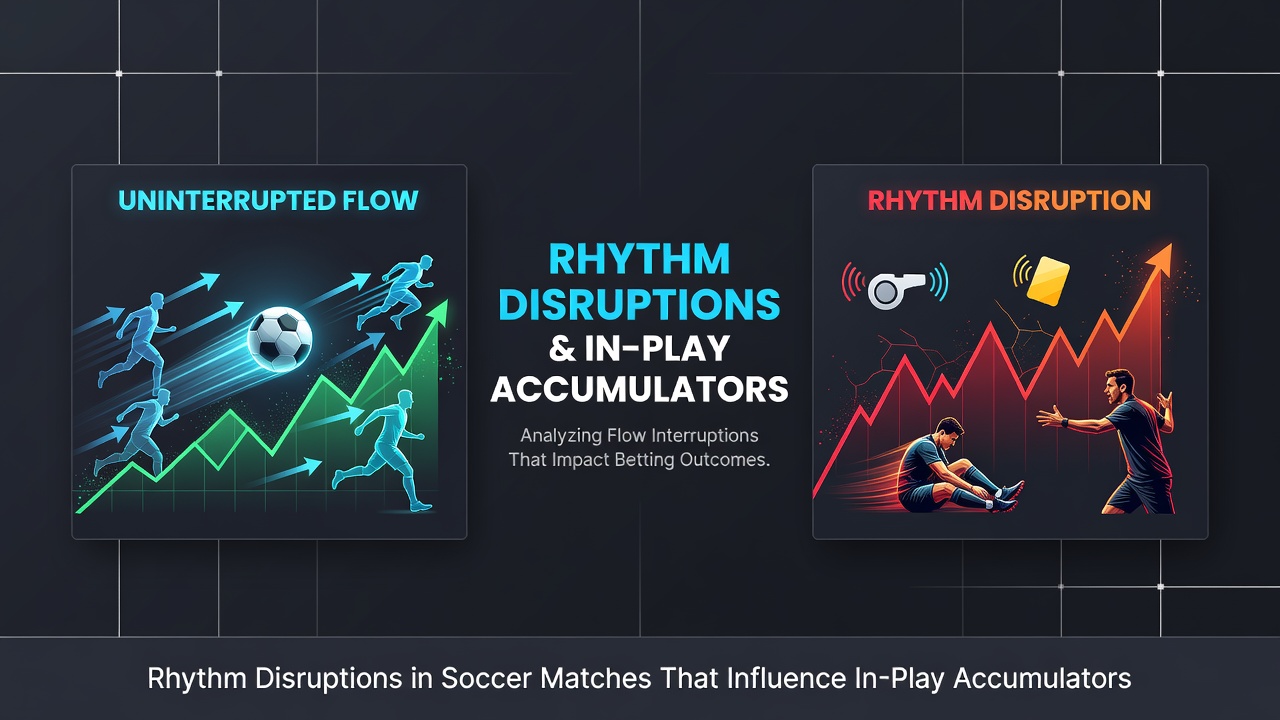
Flow Interruptions in Football Matches That Shift In-Play Accumulator Dynamics
Data from professional leagues shows that rhythm disruptions such as red cards, lengthy VAR reviews, and weather-related pauses occur in roughly 65 percent of matches during the 2025-2026 season, with these events frequently altering expected goal patterns and live betting lines. Observers note that such interruptions reset player positioning and concentration levels, which in turn influences the probability sequences that bettors track when building in-play accumulators on multiple simultaneous or sequential outcomes.
Types of Disruptions Commonly Observed
Red cards represent one of the most immediate tempo breakers because they force tactical reorganizations within seconds, and studies indicate goal-scoring rates for the reduced team drop by approximately 18 percent in the subsequent 15 minutes. Substitutions cluster around the 60th and 75th minutes in many competitions, creating micro-pauses that allow coaches to shift formations while also giving players time to receive instructions that change pressing intensity. VAR interventions average 90 seconds per review in top European leagues, during which teams often regroup and reduce high-intensity runs, leading to measurable declines in expected goals until play resumes at full pace.
Impact on Live Accumulator Construction
In-play accumulators combine live odds across several markets, so any disruption that changes one leg's probability can cascade through the entire ticket structure. When a match experiences a prolonged stoppage, live odds providers typically widen spreads on over/under totals because historical datasets reveal that post-interruption periods produce fewer shots on target for both sides in the short term. Bettors who monitor these windows often adjust stake allocations or hedge remaining legs once the new rhythm stabilizes, since evidence from tracking systems demonstrates that teams require between four and seven minutes to restore pre-disruption pressing distances after most stoppages.
Regional Patterns Across Leagues
Matches in leagues with hotter August climates, such as those beginning their 2026 campaigns in southern Europe and Australia, record higher frequencies of hydration breaks that function as additional rhythm resets. These scheduled pauses coincide with peak afternoon temperatures and correlate with temporary drops in sprint frequency tracked by wearable devices. In contrast, northern European fixtures starting the same month show fewer weather-related interruptions yet still experience similar momentum shifts from tactical substitutions, suggesting that the disruption type rather than the cause determines the subsequent statistical deviation.
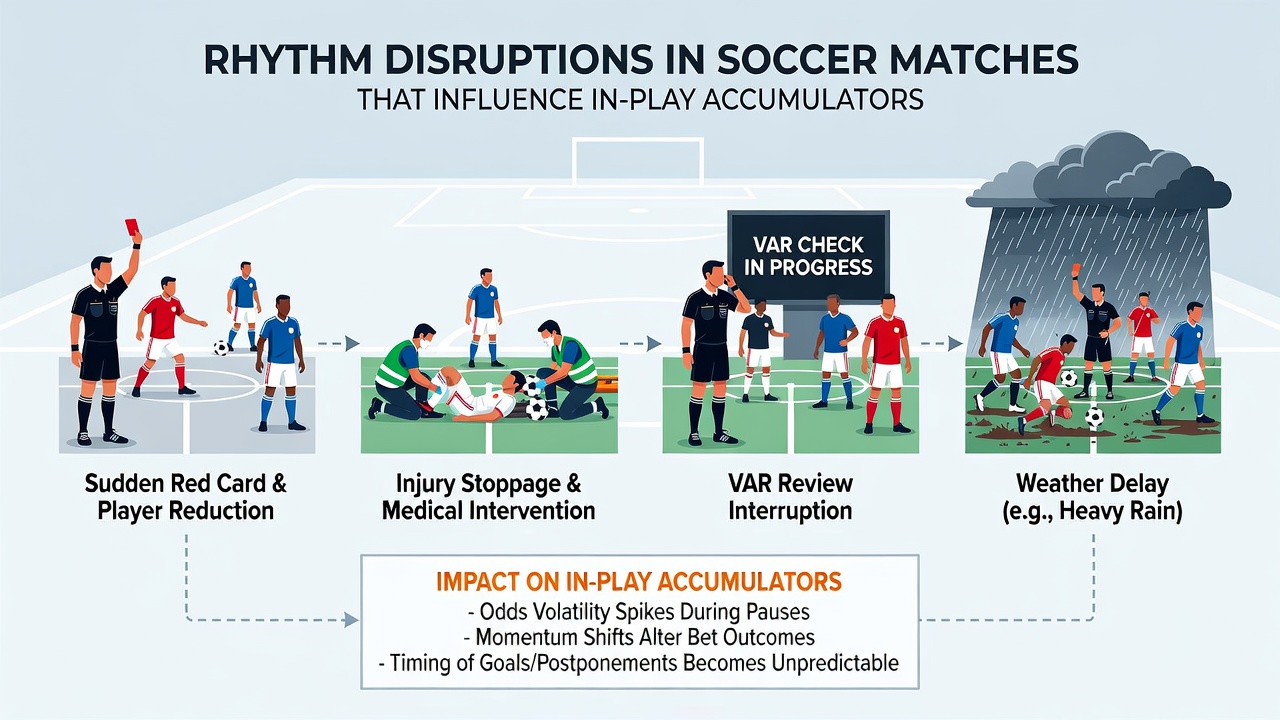
According to FIFA technical reports, stoppage time adjustments introduced in recent seasons have extended average added minutes by 1.4 per half in matches with multiple interruptions, thereby increasing the total window during which accumulator legs can settle. This extension matters because accumulators spanning several fixtures often include late-game markets where additional minutes raise the chance of late goals or cards. Data indicates that teams trailing after a disruption frequently adopt higher-risk pressing schemes once play restarts, which produces elevated variance in both corners and booking points.
Tracking Tools and Data Sources
Professional bettors rely on real-time event feeds that timestamp interruptions alongside player tracking metrics, allowing models to recalibrate expected values mid-match. Research from the University of Sydney's sports analytics group demonstrates that incorporating interruption duration as a variable improves prediction accuracy for next-10-minute goal probabilities by 7 to 9 percent compared with models that ignore stoppage context. These refined probabilities feed directly into accumulator calculators used by operators and independent analysts alike, since even small edges compound across three or more legs.
Conclusion
Patterns emerging from league-wide datasets confirm that rhythm disruptions systematically influence the statistical baselines that underpin in-play accumulator outcomes. As the 2026 season progresses, continued refinement of tracking technology and regulatory adjustments to stoppage protocols will likely generate additional variables for consideration. Those monitoring these shifts gain access to updated probability landscapes that reflect the altered match flows created by each interruption.