National Hunt Seasons: Rhythms That Shape Multi-Race Bets Across British Tracks
Mara Koch · Aug 5, 2026

National Hunt Seasons: Rhythms That Shape Multi-Race Bets Across British Tracks
National Hunt racing follows clear seasonal cycles that affect horse performance, track conditions, and betting opportunities at venues across the UK. Observers note that these patterns emerge each year from October through April, with ground firmness, race distances, and trainer approaches shifting in predictable ways that influence how accumulators get constructed from multiple meetings.
Early Season Foundations
October and November mark the start of teh jumps campaign when softer ground becomes common at tracks like Newbury and Haydock. Data indicates that certain trainers excel with horses returning from summer breaks during this period, while others wait for firmer conditions later. Those who study form often combine early-season winners from northern tracks with selections from southern courses where rainfall patterns differ, creating accumulator legs that account for regional weather variations.
Mid-Winter Adjustments
December through February brings heavier ground and longer-distance contests at places such as Ascot and Doncaster. Researchers have tracked how stamina becomes more critical as temperatures drop, leading punters to favour horses with proven records on testing surfaces. Accumulator builders frequently pair these winter specialists with shorter novice events at Wetherby or Carlisle, balancing risk across different race types while the season remains at its peak intensity.
Festival Timing and Peak Opportunities
March delivers the Cheltenham Festival, where seasonal rhythms reach their clearest expression through championship races that draw horses at their absolute peak. Figures from past seasons show that many leading trainers peak their runners for this meeting after targeted campaigns from January onward. Accumulators constructed around Festival week often include legs from parallel meetings at other tracks, allowing bettors to spread exposure while capitalising on the concentrated form lines that emerge during the four-day event.
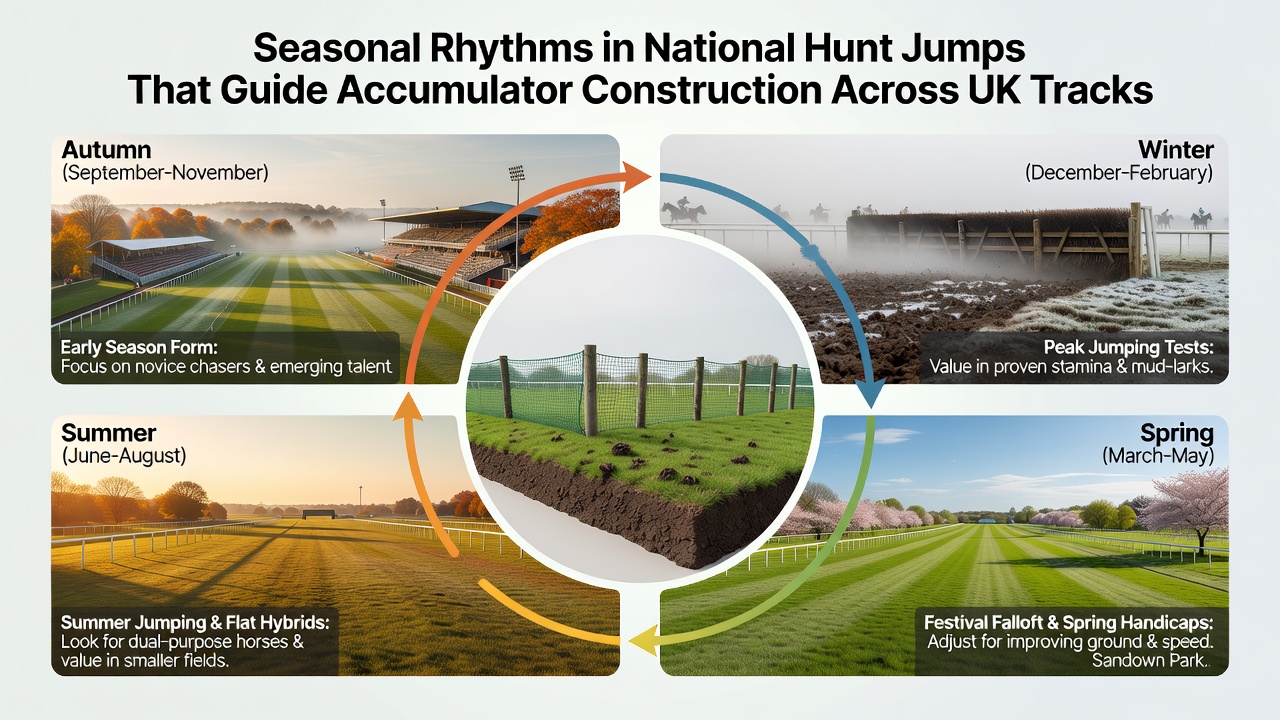
April extends the focus to the Grand National meeting at Aintree, where course configuration and seasonal progression combine to reward horses that handle the unique demands of the big fences. Studies of previous renewals reveal consistent patterns in how certain stables time their preparations from the Cheltenham period onward. Those constructing accumulators at this stage often link Aintree selections with races from Perth or Ayr, where the season begins to wind down and ground conditions start to ease.
Regional Track Variations
UK courses display distinct seasonal signatures that guide accumulator construction. Northern venues tend to retain softer ground longer into spring, whereas southern tracks dry out earlier and suit different running styles. Evidence suggests that successful multi-bet strategies account for these differences by mixing selections from both regions within the same accumulator, thereby reducing exposure to any single track's conditions.
As August 2026 approaches, planning for the upcoming jumps season begins with reviews of the previous campaign's data. Industry reports from bodies such as Racing Australia highlight comparative seasonal trends that UK observers sometimes reference when assessing long-term patterns. Trainers adjust their strings accordingly, setting the stage for the October resumption.
Practical Accumulator Construction
Building accumulators around these rhythms involves selecting races that align with current seasonal phases rather than fighting against them. A typical approach might combine an early-season handicap at a northern track with a mid-winter novice chase at a midlands venue and a spring novice hurdle from the south. Each leg reflects the prevailing ground and distance preferences that dominate at that point in the calendar.
Additional layers come from monitoring trainer and jockey strike rates that fluctuate with the season. Some yards record higher returns in the opening months when fresher horses dominate, while others maintain consistency through the winter slog. Accumulator constructors who track these shifts gain an edge by weighting their selections toward teh active operators at each stage.
Conclusion
Seasonal rhythms in National Hunt jumps racing provide a framework that shapes how accumulators are assembled across UK tracks. From October's soft-ground foundations through the intensity of March and April festivals, these cycles influence horse readiness, track behaviour, and strategic betting decisions. Data from multiple seasons confirms that understanding these patterns allows for more structured multi-race selections that align with the natural progression of the jumps calendar.