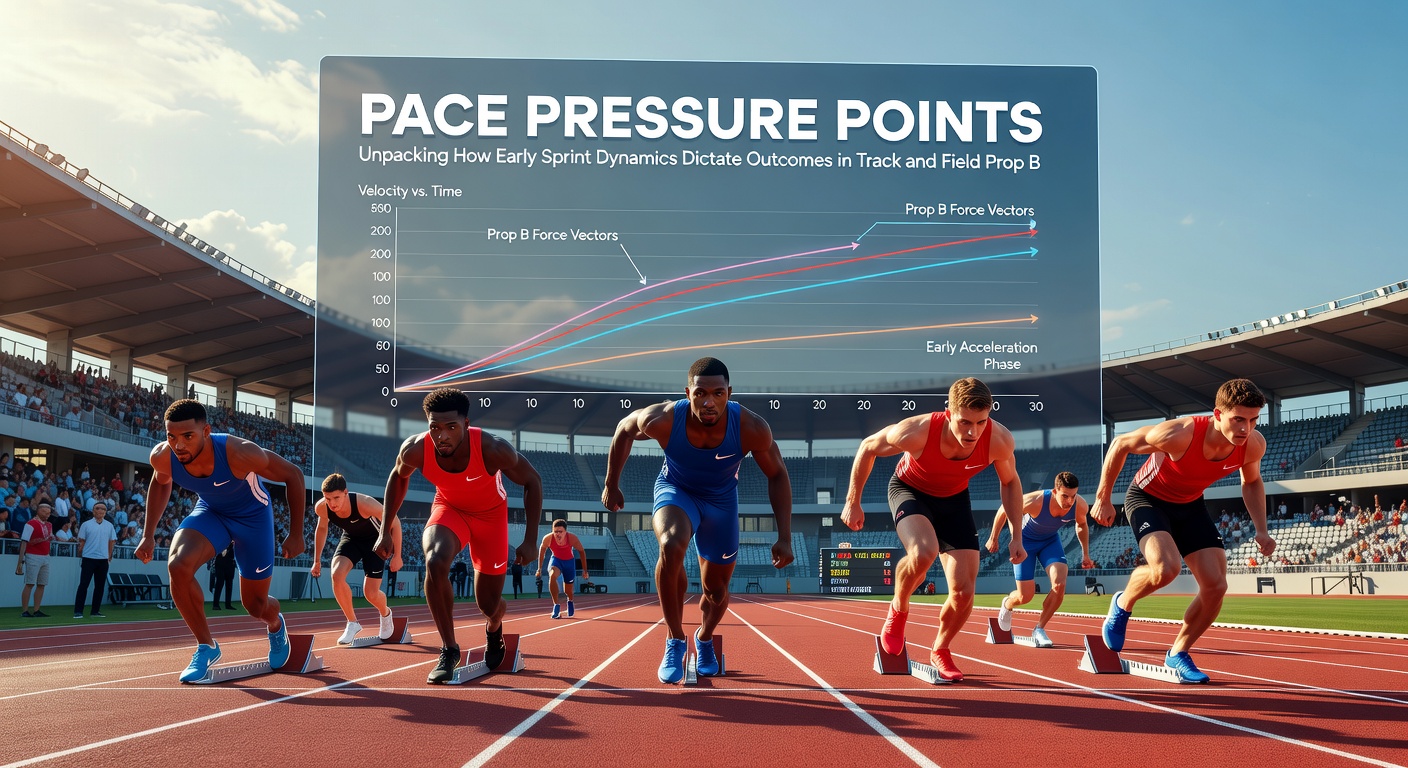
Pace Pressure Points: Unpacking How Early Sprint Dynamics Dictate Outcomes in Track and Field Prop Bets
Rafael Lehmann · May 22, 2026
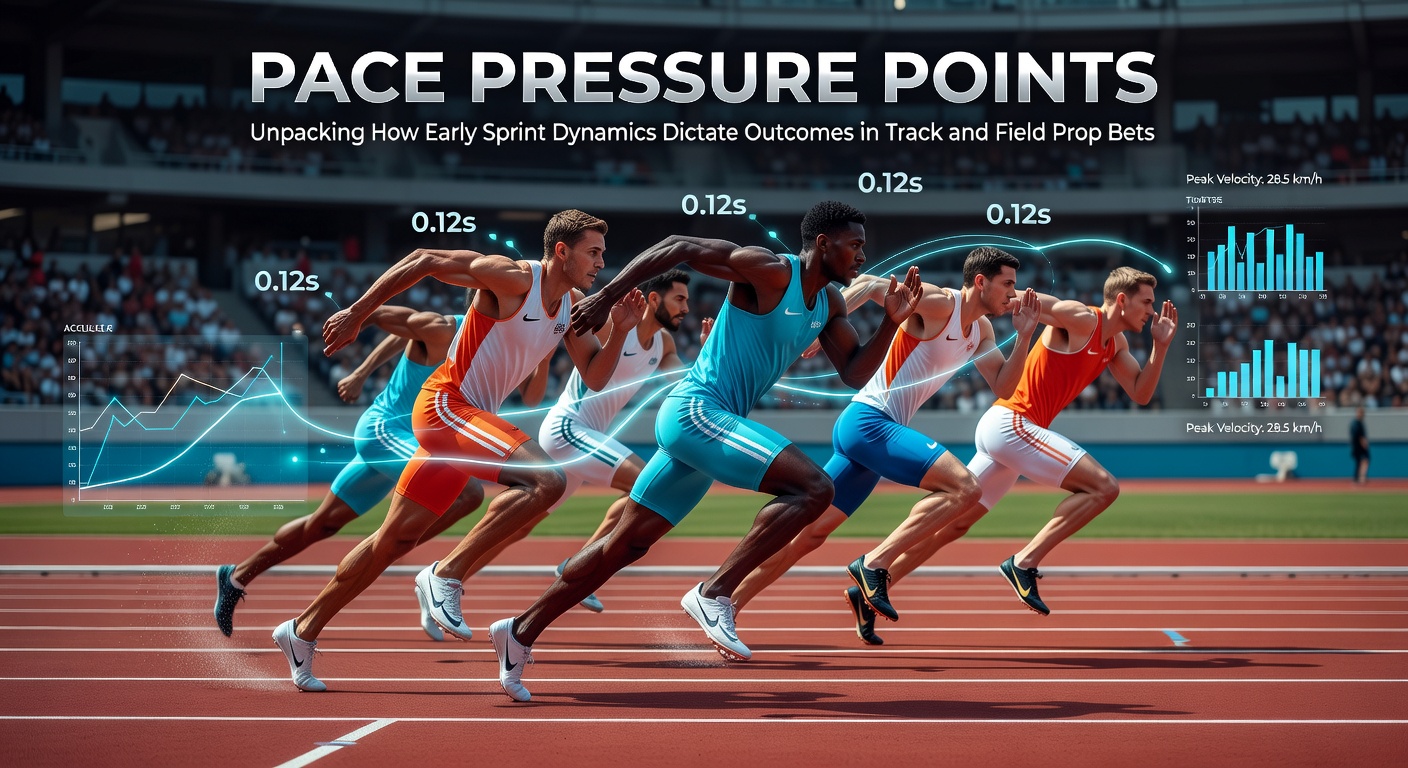
Pace Pressure Points: Unpacking How Early Sprint Dynamics Dictate Outcomes in Track and Field Prop Bets
Early sprint dynamics shape outcomes in track and field prop bets because the first 10 to 30 meters set the conditions for final times and race positions. Reaction time at the gun combines with initial acceleration to create measurable splits that betting markets often price separately from overall results. Observers note that athletes who gain even a tenth of a second in the blocks frequently convert that margin into winning positions by the finish line in 100-meter and 200-meter events. Data compiled across multiple Diamond League meets and championship rounds shows consistent patterns. Split times recorded at 10 meters and 20 meters correlate strongly with final placement when field sizes exceed eight competitors. Prop markets on over-under times or head-to-head matchups therefore incorporate these early metrics because late-race fatigue rarely erases an early deficit once top-end speed equalizes among elite runners.Biomechanical Foundations of the Start
The starting block phase demands precise force application through the feet and rapid extension of the hips and knees. Researchers tracking ground-reaction forces during elite competitions report that peak power output in the first two strides determines how quickly an athlete reaches 60 percent of maximum velocity. Those who've analyzed high-speed footage observe that minor variations in block clearance angle can shift 10-meter split times by 0.03 to 0.07 seconds. Prop bettors who follow these measurements often examine training data released after major meets. When governing bodies publish reaction-time statistics alongside video, patterns emerge that link sub-0.15-second reactions to higher probabilities of finishing in the top three. This information feeds into live betting adjustments once the gun fires and early splits become visible on timing systems.Prop Market Mechanics in Sprint Events
Betting exchanges and sportsbooks structure prop wagers around intermediate times and positional outcomes rather than solely on final results. A typical market might offer odds on whether a specific athlete will record a sub-1.90-second split at 20 meters or whether two runners will remain within 0.10 seconds of each other at the 30-meter mark. These micro-markets exist because early dynamics produce reliable signals before full race results are known. Studies conducted by performance laboratories attached to national athletics federations demonstrate that athletes who lead at 20 meters win approximately 68 percent of 100-meter finals when wind readings stay within legal limits. The same datasets reveal lower conversion rates in 200-meter races because the curve introduces additional variables after the initial straight. Bettors therefore adjust stake sizes according to event distance and lane assignments.