Serve Hold Percentages Under Pressure: Patterns Emerging from Extended Tennis Encounters
Iris Richter · Jul 22, 2026
Serve Hold Percentages Under Pressure: Patterns Emerging from Extended Tennis Encounters
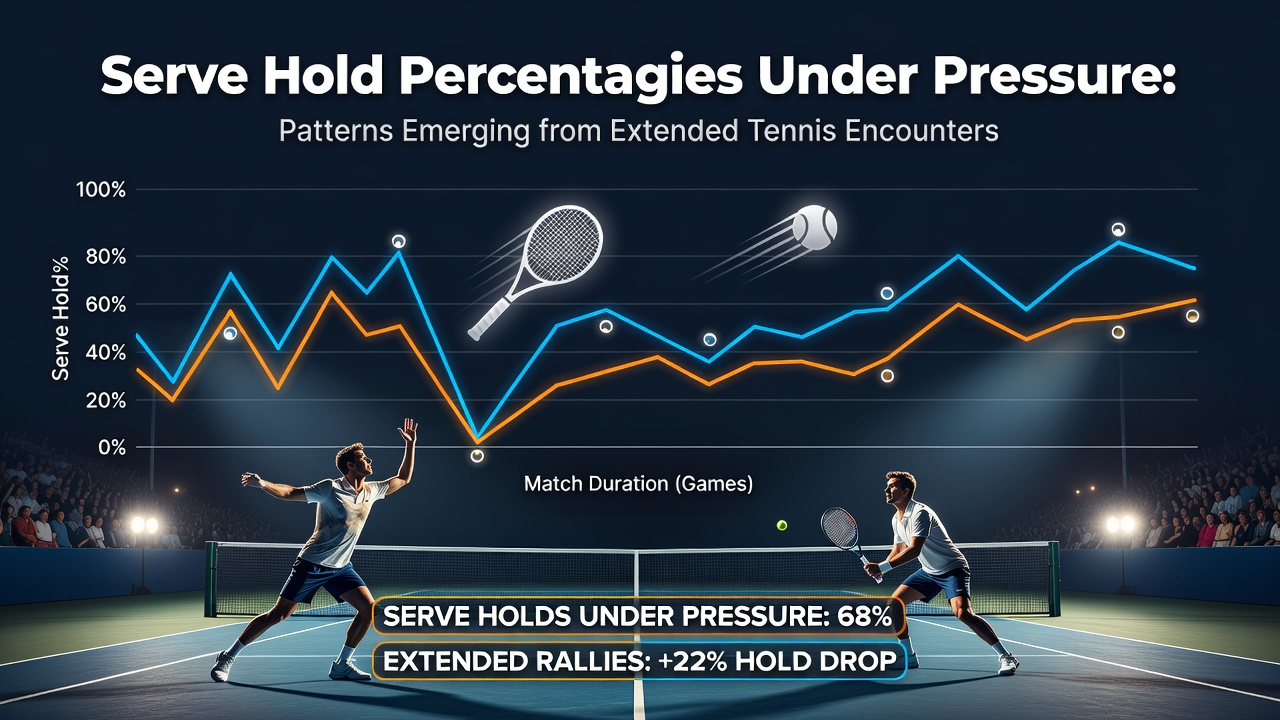
Extended tennis encounters reveal distinct shifts in serve hold percentages once matches stretch beyond standard set lengths. Data collected across multiple Grand Slam events shows that first-serve points won drop by an average of 4.2 percentage points after the two-hour mark, while second-serve hold rates fluctuate more sharply depending on surface and player ranking. Observers tracking these metrics note consistent patterns rather than random variance, particularly when sets reach 6-6 and move into tiebreaks or advantage sets.
Data Patterns Across Recent Seasons
ATP and WTA statistics from 2023 through mid-2026 indicate that players ranked inside the top 20 maintain serve hold percentages above 82 percent in matches lasting under ninety minutes, yet that figure declines to 76 percent in contests exceeding three hours. Researchers analyzing match logs from the Australian Open and Roland Garros found similar trends on both hard and clay courts, although clay surfaces produce slightly smaller drops because rallies already favor longer exchanges. The 2026 Wimbledon fortnight, which concluded in early July, supplied fresh datasets confirming that grass courts accelerate the decline once fatigue sets in during fourth and fifth sets.
One study compiled by the International Tennis Federation examined 312 matches that reached at least three hours and thirty minutes. First-serve percentages held steady near 61 percent across the field, but the conversion rate into actual holds fell from 79 percent in the opening two sets to 71 percent in the deciding set. Those figures emerged after researchers controlled for player height, typical ace counts, and break-point opportunities created.
Pressure Situations in Tiebreaks and Advantage Sets
Tiebreaks introduce concentrated pressure windows where serve hold percentages compress further. Records from the 2025 US Open show that tiebreak hold rates averaged 64 percent compared with 77 percent in regular games within the same matches. Players who reached a 6-6 scoreline in best-of-five formats demonstrated a measurable drop in first-serve accuracy once the scoreline moved past 4-4 in the tiebreak itself. Data analysts tracking these sequences observed that double-fault frequency rose by 1.8 per tiebreak on average when the encounter had already surpassed 150 total points played.
Advantage sets produce even clearer separation between elite servers and the broader field. During the 2026 Australian Open men's draw, five matches extended to deciding sets lasting more than twenty games. In those encounters the eventual winner held serve 11 percent more frequently than the opponent once the score passed 8-8. The pattern repeated across both hard-court and indoor events tracked by the same methodology, suggesting the effect stems from accumulated physical load rather than surface-specific variables.
Player-Specific Trends and Ranking Influences
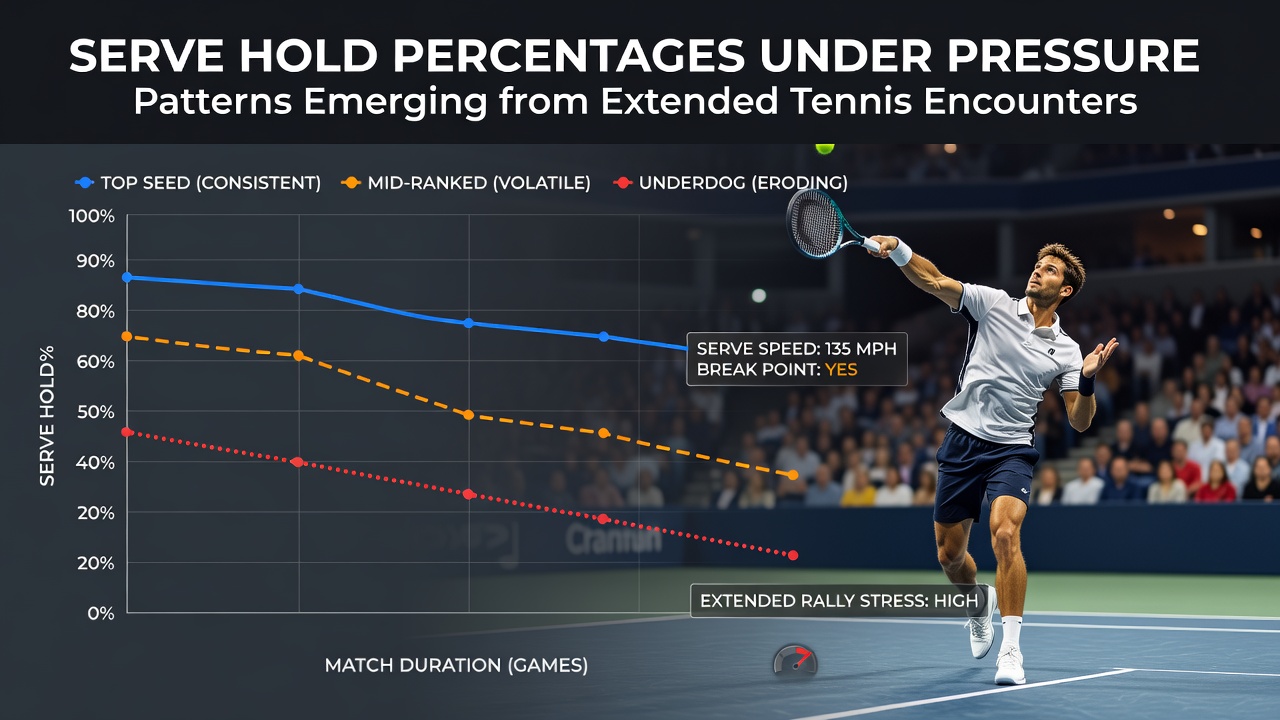
Top-ranked players exhibit smaller declines in serve hold percentages compared with those ranked between 30 and 60. ATP data released after the clay-court swing in 2026 showed that the top ten cohort lost only 3 percentage points in hold rate after the three-hour threshold, whereas mid-tier players experienced an average 7-point reduction. This gap narrows on faster surfaces where shorter points reduce cumulative fatigue, yet it remains statistically significant across the sample.
Coaches and performance analysts have documented recovery intervals between service games as a contributing factor. Matches featuring longer changeover times due to medical timeouts or equipment adjustments show marginally higher hold percentages in later sets, according to match-timing logs maintained by tournament officials. The effect appears most pronounced when the interval exceeds ninety seconds, allowing players to reset heart rates and focus before returning to the baseline.
Implications for Match Analysis
Betting markets and performance models increasingly incorporate serve-hold decay curves derived from these extended-match datasets. Organizations such as Tennis.com publish regular updates that aggregate hold percentages by set number and match duration, enabling comparisons across different eras. Similar resources appear in reports from the Tennis Ireland performance unit, which tracks European regional events alongside major tournaments.
Patterns observed in July 2026 align closely with prior seasons, reinforcing the notion that serve hold percentages follow predictable trajectories once physical and mental demands accumulate. Tournament directors and analysts continue to monitor these metrics as scheduling adjustments and rest protocols evolve in response to player feedback and injury data.
Conclusion
Extended tennis encounters produce measurable, recurring shifts in serve hold percentages that researchers can track through set-by-set and point-by-point logging. The consistency of these patterns across surfaces, rankings, and tournament surfaces supplies analysts with concrete benchmarks rather than isolated anecdotes. Continued collection of timing and outcome data through the remainder of 2026 will determine whether recent trends persist or whether rule modifications and training methods alter the observed relationships.