Syndicate Data Networks Reshaping Live Accumulator Tactics in Football and Tennis
Greta Neumann · Aug 16, 2026

Syndicate Data Networks Reshaping Live Accumulator Tactics in Football and Tennis
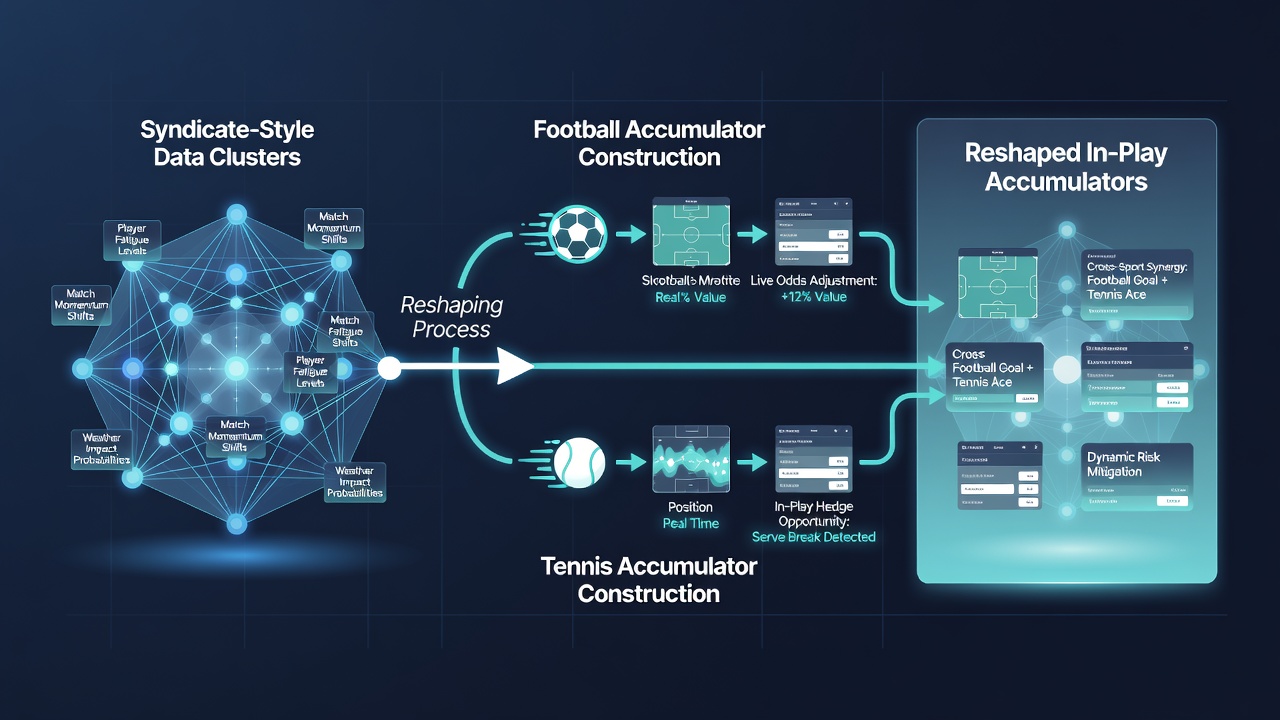
Betting syndicates have long relied on coordinated data analysis to identify edges, yet recent shifts in technology allow these groups to apply cluster-based models directly to in-play accumulator construction across football and tennis markets. Observers note that these networks process real-time inputs such as player fatigue metrics, set-by-set variance patterns, and possession-adjusted probabilities, then group correlated outcomes into clusters that feed accumulator selections. Research from the University of Nevada Las Vegas Center for Gaming Research indicates that such clustering techniques emerged more prominently after 2024 as operators expanded live betting interfaces, which in turn gave syndicates access to granular feeds that static pre-match models could not match.
Cluster Mechanics in Football Markets
Football in-play accumulators benefit when data clusters identify simultaneous correlations across multiple matches, for instance linking high pressing intensity in one fixture with over 2.5 goal expectations in another. Syndicates build these clusters by feeding live event data into algorithms that segment markets by shared variables including expected goal differentials and substitution timing, then rank accumulator legs according to joint probability outputs. Data shows that clusters incorporating both team-level and league-wide indicators produce accumulator combinations with tighter variance bands than those assembled from isolated statistics. One documented approach groups matches by referee tendencies toward added time, since those patterns often align with late goal clusters that syndicates exploit for cash-out timing decisions during the same fixture window.
Tennis Adaptations and Surface Variables
Tennis markets present distinct challenges because point-by-point data arrives faster than football event streams, forcing syndicates to recalibrate cluster windows every service game. Clusters here typically combine serve-hold percentages adjusted for opponent return ratings with fatigue signals drawn from rally length averages, allowing accumulators to stack over/under game totals across concurrent matches on different surfaces. Figures reveal that grass-court clusters diverge sharply from clay-court groupings because bounce consistency metrics alter break-point conversion rates, which syndicates factor into live accumulator resizing. During the 2026 grass season that concluded in August, operators recorded increased in-play accumulator volume on combined ATP and WTA events, a trend analysts attribute to syndicates publishing cluster-derived probability matrices that bettors then replicate through automated bet placement tools.
Integration With Operator Platforms
Platform operators have responded by embedding APIs that deliver the same granular feeds syndicates use, although access tiers differ by jurisdiction. European regulators outside the United Kingdom, such as those under the Malta Gaming Authority framework, require operators to log cluster-driven bet patterns for integrity monitoring. These logs demonstrate that accumulator stake sizes linked to syndicate clusters often exceed average retail volumes by factors of three to five during peak live windows. Yet platform rules also cap the number of simultaneous legs per accumulator, which forces syndicates to rotate cluster selections across successive in-play periods rather than locking in single long-shot tickets. The result appears in settlement data where multi-leg tennis accumulators show higher completion rates when clusters account for weather delays and court assignment changes that static models overlook.
Regulatory and Integrity Dimensions
Industry groups including the International Betting Integrity Association have published guidance urging operators to flag rapid cluster-based accumulator adjustments that coincide across multiple accounts, since coordinated patterns may indicate shared data sources. Australian regulatory filings from the Australian Communications and Media Authority similarly track how live betting interfaces handle high-velocity data inputs during major tennis tournaments. Those filings note that accumulator construction tools now include optional cluster overlays supplied by third-party analytics vendors, which retail users can toggle on or off. The presence of such overlays has coincided with measurable shifts in average accumulator length, rising from 4.2 legs in 2023 to 5.8 legs by mid-2026 across monitored football and tennis products.
Conclusion
Syndicate-style data clusters continue to influence in-play accumulator construction by supplying structured, real-time segmentation of correlated outcomes in both football and tennis. Operators adjust interface rules while regulators monitor pattern consistency across accounts, and academic centers track the resulting changes in betting volume distribution. The pattern holds that clusters reduce certain variance components within accumulator portfolios even as they increase the number of legs that syndicates and retail users attempt to combine within single live tickets.