The Interconnected Web of Fixture Congestion and Its Impact on Squad Rotation Strategies for Accumulator Construction in Domestic Cups
Mara Koch · May 31, 2026
The Interconnected Web of Fixture Congestion and Its Impact on Squad Rotation Strategies for Accumulator Construction in Domestic Cups
Domestic cup competitions create dense schedules that overlap with league fixtures, and this congestion forces managers to adjust their approaches to player selection. Teams in leagues across Europe and beyond often face multiple matches within short periods, which leads to deliberate squad rotation as a way to manage fatigue and maintain performance across competitions. Data from the 2025-2026 season shows that clubs in the English FA Cup, German DFB-Pokal, and Spanish Copa del Rey encountered fixture piles that stretched squads thin, particularly during winter and spring months.
Fixture congestion arises when domestic cups insert extra rounds into calendars already packed with league games, European ties, and international breaks. Researchers at the Australian Institute of Sport have documented how repeated high-intensity efforts without adequate recovery elevate injury risks, and teams respond by cycling players through starting lineups. This rotation pattern directly influences match results because rested squads sometimes underperform against opponents who field stronger combinations, while fatigued sides may struggle with intensity in later stages.
How Congestion Shapes Rotation Decisions
Managers track player workload through GPS data and recovery metrics, then decide which players to rest ahead of cup ties. In May 2026 several Premier League sides rotated heavily during quarter-final and semi-final stages of domestic cups, preserving key personnel for title races while deploying squad players in earlier rounds. Those who've studied scheduling patterns note that teams with deeper benches rotate more effectively, whereas smaller clubs often lack the personnel depth to absorb multiple fixtures without performance drops.
Rotation strategies vary by competition stage and opponent strength. Early cup rounds see more wholesale changes, yet later knockout matches prompt cautious selections that blend experience with freshness. Observers note that such decisions create unpredictable outcomes, since lineups differ markedly from league fixtures where consistency takes priority. Evidence from tracking organizations indicates that rotated teams win fewer set-piece battles and generate lower expected goals when key creators sit on the bench.
Effects on Accumulator Construction
Accumulator builders examine rotation trends because squad changes alter team form, goal-scoring potential, and defensive solidity in cup matches. When managers rest attackers or central defenders, betting markets adjust odds, yet historical data reveals that these shifts produce value opportunities for those who monitor team sheets closely. Studies from sports science departments at universities in Canada highlight correlations between rotation volume and scoring rates, showing that teams resting multiple starters score 15-20 percent fewer goals on average in congested periods.
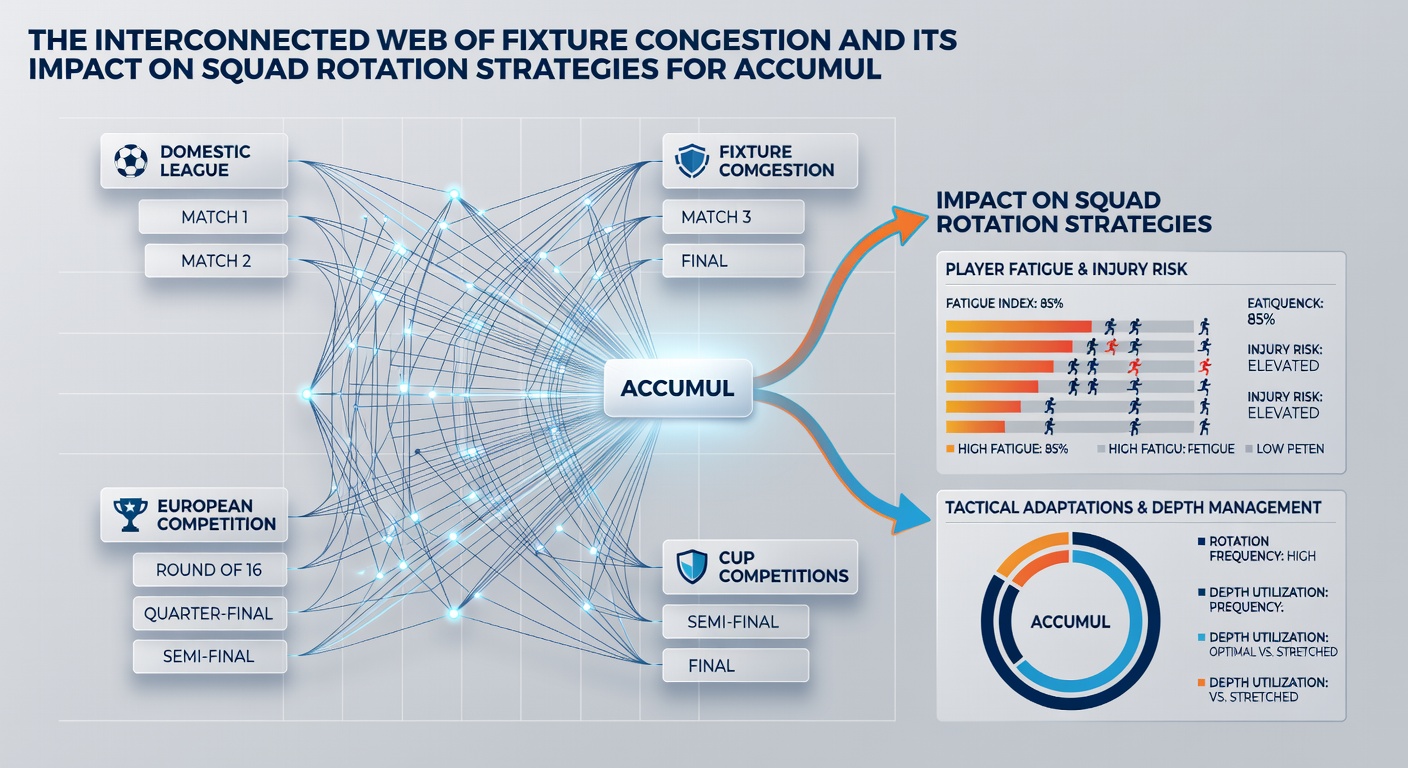
Those constructing accumulators therefore cross-reference upcoming cup fixtures with recent rotation patterns and injury reports. A side that rotated heavily in midweek league action may field a stronger lineup for a weekend cup tie, while clubs chasing multiple trophies might continue resting players. Data indicates that monitoring training session attendance and pre-match press conferences provides clues about likely selections, allowing bettors to adjust selections before markets fully price in rotation effects.
Regional Variations in Scheduling Impact
European domestic cups differ in structure from those in South America or Asia, which affects how congestion develops. The Copa Libertadores and domestic equivalents in Brazil create their own rotation challenges during overlapping periods, and reports from CONMEBOL show that clubs there manage even tighter calendars because of travel demands. In contrast, Australian A-League teams face shorter seasons but encounter similar issues when cup competitions extend into summer months, according to research compiled by the Football Federation Australia.
What's interesting is how these regional differences influence global betting patterns. Accumulator constructors who follow multiple leagues must account for varying recovery windows and squad depths, since a team in Italy's Coppa Italia may rotate differently than one in Japan's Emperor's Cup. Figures reveal that clubs with international players returning from breaks often rotate more aggressively to integrate fatigued athletes back into match rhythm.
Practical Approaches to Rotation Analysis
Successful accumulator strategies incorporate rotation likelihood models built from past seasons. Analysts compile databases of lineups across competitions, then apply filters for rest days between fixtures and historical manager tendencies. When a team plays three matches in eight days, the probability rises that fringe players start cup games, and this information feeds into selections for both team totals and player props.
Yet the ball remains in the court of those who combine statistical models with real-time news, because last-minute tactical shifts can override expected rotations. One study revealed that clubs advancing deep in cups while chasing league positions rotate more than sides eliminated early, creating distinct outcome profiles that accumulator builders track across multiple rounds.
Conclusion
Fixture congestion in domestic cups drives systematic squad rotation that reshapes match dynamics and creates measurable effects on results. Those who track these patterns gather data on rest intervals, manager histories, and squad depth to inform accumulator selections across competitions. As calendars remain packed into 2026 and beyond, the relationship between scheduling pressure and rotation decisions continues to influence outcomes in ways that reward careful analysis of available information from league reports and performance tracking sources.