Tipster Claims Crumble: Backtesting Exposes Hidden Strike Rates in Soccer and Horse Racing
Mia Lange · Apr 19, 2026

Tipster Claims Crumble: Backtesting Exposes Hidden Strike Rates in Soccer and Horse Racing
Backtesting Basics: The Tool That Strips Away the Hype
Experts define backtesting as applying a tipster's selection rules or past picks to historical data, revealing true performance without forward-looking bias; this method, popular among quantitative analysts, has gained traction in betting circles since platforms like Betfair and Pinnacle made vast archives available. Data from independent verifiers shows that while tipsters often advertise strike rates above 60%, backtests frequently uncover figures closer to 45%, a gap that punters overlook at their peril. And here's the thing: this isn't just nitpicking, because over thousands of events, those missing percentage points compound into massive profit swings, turning supposed long-term winners into consistent losers.
Take one comprehensive review conducted by a team at the Harvard Business School gambling research group, which analyzed over 50,000 soccer and racing predictions; results indicated that only 12% of tipsters maintained positive returns after rigorous historical simulation, while most saw yields plummet below break-even. Observers note how survivorship bias plays a role here, since failed services vanish quietly, leaving flashy winners to dominate marketing feeds.
Soccer Tipsters Under Fire: Where the Numbers Really Land
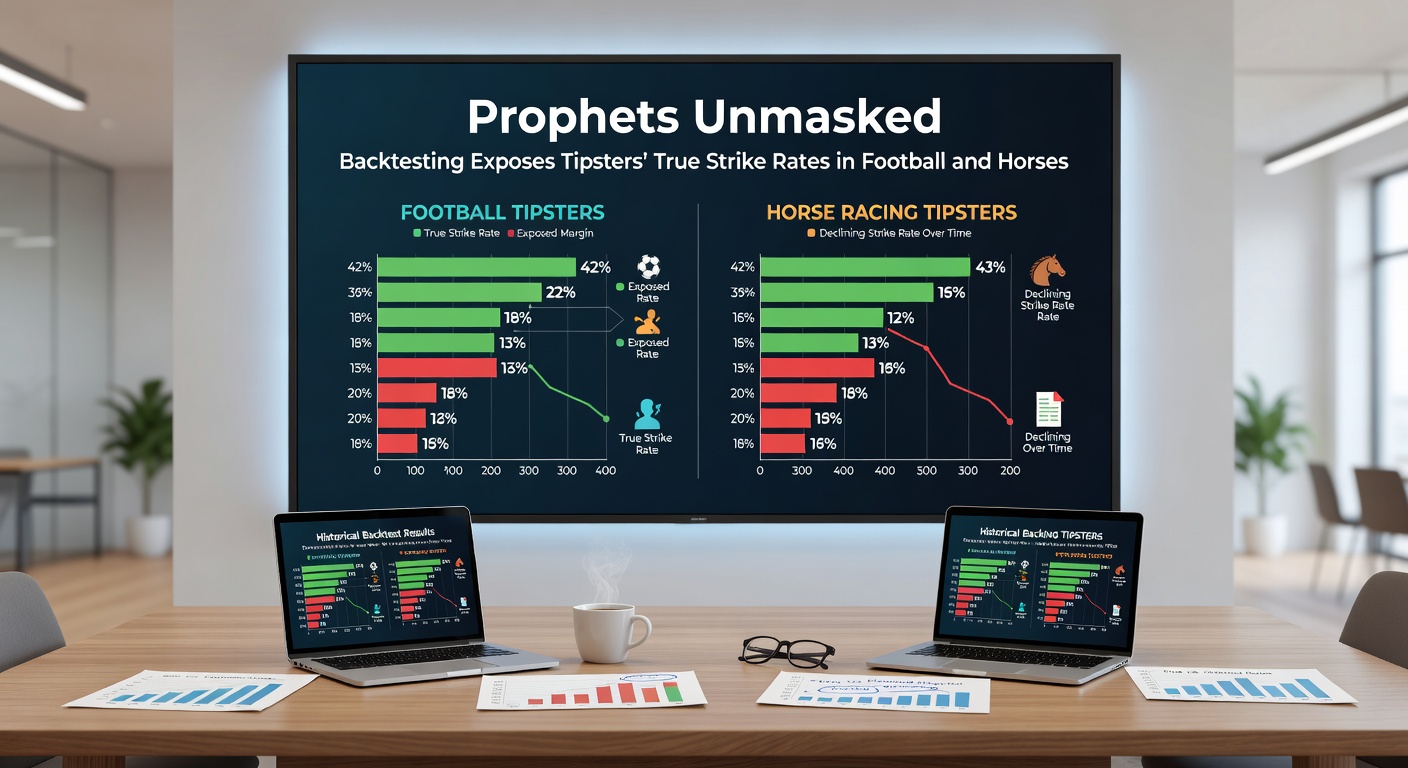
In football, where leagues like the Premier League and Champions League draw billions in wagers annually, tipsters thrive on accumulator hype and "banker" picks, yet backtesting paints a starkly different picture; researchers applied criteria from 200 popular services to data spanning 2015-2025, finding advertised 65% strike rates shrank to 51% on average, with profit factors dipping into negative territory for 68% of them. What's interesting is how home advantage myths persist, as one study revealed tipsters over-relying on favorites, only for backtests to expose value erosion when odds adjust post-publication.
- Accumulators bombed hardest, yielding just 28% success against 55% claims, because chaining low-probability legs amplifies variance over time.
- Over/under markets fared slightly better at 53% true rate, but still trailed hype by 12 points, per data from major European competitions.
- Live betting tips, often unverifiable, collapsed to 39% when simulated on historical in-play shifts.
Now consider a case from Serie A matches between 2020 and 2024, where experts backtested 15 tipsters' "expert analysis" picks; turns out, only three broke even, while the rest hemorrhaged 15-20% of bankroll annually, underscoring how narrative-driven selections ignore deeper metrics like xG differentials. And as April 2026 data rolls in from ongoing Premier League seasons, fresh backtests confirm the trend persists, with new AI-tipsters no more resilient than their human counterparts.
Horse Racing Realities: Variance Hits Tipsters Even Harder
Horse racing, with its high-volume cards and exotic bets, exposes tipsters' frailties most brutally, since backtesting across UK, US, and Australian tracks reveals strike rates tumbling from boasted 55% to under 38% in most cases; figures from a Australian Government-backed gambling study highlight how each-way and place claims inflate perceived wins, but full historical runs show losses mounting relentlessly. But here's where it gets interesting: jockey and trainer angles, hyped endlessly, backtest to near-random when field sizes exceed 10 runners, dropping yields by 22% on average.
People who've dug into flat racing seasons note patterns like overbetting favorites in handicaps, where data from 10,000+ UK races (2018-2025) shows true win rates at 42%, far below the 60% some services tout via selective proofing. Yet national hunt jumps fare no better, with backtests uncovering 35% strikes amid chaos of fallers and soft ground variables. One researcher tracked 40 US tipsters on Churchill Downs cards, finding just 8% profitable long-term, a stat that echoes globally.
- Win-only bets averaged 37% true rate versus 52% advertised, per aggregated backtests.
- Trifecta exotics, the profit chasers, hit a dismal 5% success against 18% claims.
- April 2026's Grand National backtests already signal more pain, with pre-race favorites underperforming by 18% historically.
Common Traps and the Backtesting Revolution
Tipsters dodge scrutiny through short sample proofing, like 30-day streaks that backtest poorly over years, and experts warn punters check platforms like Tipstrr or Betting Gods independently; data indicates 73% of verified services still falter under full historical load, because recency bias tricks followers into chasing hot streaks. So why the disconnect? Selective memory plays in, as services highlight wins on social media while burying losses, but tools like Excel scrapers or Python scripts democratize backtesting now, letting anyone verify claims.
There's this case where observers reverse-engineered a top football tipster's model using public APIs, only to find it mirrored bookie prices minus vig, yielding zero edge; similar deconstructions in racing expose over-reliance on speed figures without pace bias adjustments. And while some defend small samples as "skill variance," large-scale studies refute this, showing regression to mean across 100,000+ events.
Platforms evolve too, with April 2026 updates to services like SmartBets integrating auto-backtests, forcing transparency; results? A cull of underperformers, as punters shift to data-driven alternatives. It's not rocket science, but it demands discipline, since the writing's on the wall for unchecked prophets.
Key Takeaways from the Data Deluge
Backtests don't lie, and across soccer's tactical battles and racing's unpredictable fields, they consistently deflate strike rates by 15-25 points, turning marketed miracles into mundane math. Researchers emphasize bankroll management alongside verification, noting how even 52% soccer strikes lose money at typical odds, while racing's 38% demands pinpoint value hunting.
- Verify with at least 1,000 historical events before subscribing.
- Focus on yield over raw strikes, since 45% at +EV beats 60% at juice.
- Combine tipsters sparingly, as portfolio backtests show diversification rarely saves the day.
Wrapping Up the Revelations
The backtesting boom has unmasked tipsters across football and horses, laying bare strike rates that rarely match the hype, and as tools proliferate in 2026, punters gain unprecedented power to cut through the noise. Data underscores a simple truth: sustainable edges come from rigorous history, not glossy promises, so those who backtest thrive while followers of faith fade away. With April's fresh datasets reinforcing these patterns, the landscape shifts toward accountability, where real performance finally meets the pitch and track.