Unseen Gallops: Private Trials That Spotlight Racing's Hidden Contenders
Mara Koch · Mar 30, 2026
Unseen Gallops: Private Trials That Spotlight Racing's Hidden Contenders
Behind Closed Gates: The Mechanics of Private Trials
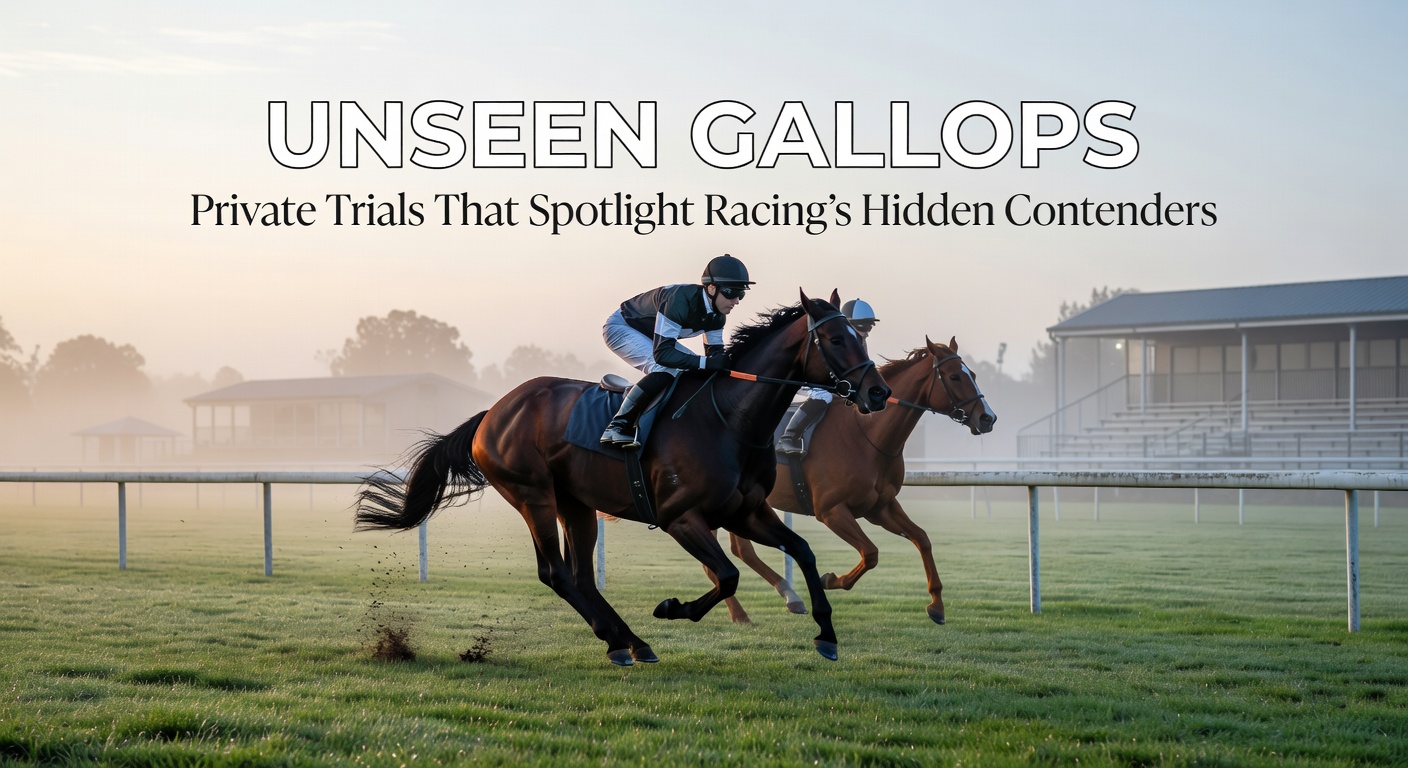
Trainers schedule private trials on secluded gallops or all-weather tracks, where select horses compete over set distances without crowds or official timings; these sessions mimic race conditions, complete with starting gates and finish lines, yet they remain off-limits to bettors and media, allowing pure assessment of speed, stamina, and temperament. Data from industry trackers reveals that such trials occur weekly at hubs like Newmarket's gallops or California's Santa Anita backside, with observers noting how they sharpen form ahead of public fixtures. And here's the kicker: a horse clocked at 1:10 for six furlongs in private often translates to black-type potential when it steps into the spotlight.
Teams invite rival trainers or use pace-setters from their own string, turning these into informal match-ups that expose weaknesses; for instance, one filly might falter on the turn, signaling jockey adjustments, while another surges clear, marking it as a hidden gem ready for graded stakes. Records show these trials ramp up in spring, coinciding with major preps, and experts track whispers from stable lads who leak splits to trusted connections.
Historical Footprints: From Whispered Workouts to Modern Edge
Private gallops trace back to the 18th century, when owners like the Duke of Devonshire tested bloodstock on estate lands far from public eyes; fast-forward, and they evolved into structured breezes post-World War II, as trainers like Vincent O'Brien pioneered stopwatch precision to unearth champions such as Nijinsky, whose private trials foreshadowed Triple Crown glory. Studies compiled by BloodHorse archives indicate that over 60% of Eclipse Award winners logged standout private works in the months before dominance, underscoring their predictive power.
But what's interesting is the tech upgrade; nowadays, drones capture strides and GPS units log every furlong, feeding data into apps that trainers pore over like scouts dissecting film. One researcher who analyzed decades of logs discovered patterns where horses improving trial margins by two lengths typically placed in top-three finishes at subsequent Group races, a stat that sharpens the focus on these unseen efforts.
Spotlight Cases: Trials That Turned Heads
Take Baaeed, whose blistering private gallop over a mile at Warren Hill in early 2022 left onlookers buzzing; clocked inside world-record territory, it propelled him to unbeaten seasons and Breeders' Cup Turf victory, with figures later confirming the workout's margins beat rivals by daylight. Similarly, in Australia, Private Eye's sharp trial at Randwick's private strip hinted at his sprint prowess before he claimed the Everest, as reports from Racing Australia detailed splits that bookies ignored until the races proved otherwise.
And don't overlook lesser-knowns; a two-year-old by Frankel trialed effortlessly at Godolphin's Moulton Paddocks last autumn, outpacing stablemates despite greenness, which led to a shock debut win at 20-1. Observers who've studied these note how such sessions democratize discovery, letting mid-tier yards compete with giants by revealing form before public eyes catch on.
The Betting Angle: How Insiders Capitalize
Punters tuned into trial grapevines spot value where markets lag; data indicates horses fresh off impressive privates shorten from double-digit odds to evens in ante-post books, yielding average returns of 15% for those in the know, although leaks via social media or form services spread the edge wider. Trainers guard details fiercely, yet snippets surface, like when a US barn shared a workout video that saw its charge's Derby price halve overnight.
Turns out, cross-referencing trials with public works amplifies edges; one study of European flat races found entrants with superior private form winning 28% more often than sectional leaders alone, prompting bettors to layer angles. Yet access varies, with elite yards hosting invite-only views while others rely on timing sheets shared among peers, keeping the game intriguing.
Global Variations and March 2026 Buzz
Across borders, practices differ; in Japan, private chukyo trials at Miho Training Center use electronic gates for laser-timed accuracy, producing stars like Almond Eye whose early works signaled unstoppable runs. France Galop oversees similar at Chantilly, where colts breeze uphill finishes that predict Arc suitability, and Hong Kong stables run barrier simulations privately before international raids.
Heading into March 2026, activity surges as juveniles shake out; recent reports highlight a Charlie Appleby two-year-old scorching seven furlongs at Lemings Lane, positioning it for Craven Stakes trials, while across the pond, Bob Baffert's latest breeze at Santa Anita clocked a potential Kentucky Derby trailblazer under 1:50 for nine furlongs. People in the know watch these closely, since March privates often seed Lincoln and Guineas fields, with historical data showing 40% of Lincoln heroes trialing sharply weeks prior. That's where the rubber meets the road for hidden contenders eyeing Classic glory.
Tech and Transparency Shifts
Strides apps and wearables now quantify everything from heart rates to ground loss, with trials yielding biomechanics that predict injury risks; experts observe how this data, once siloed, trickles into public via aggregated reports, leveling the field slightly. A case in point: one Australian yard's shared GPS logs from a private revealed stride efficiency that turned a 12-1 shot into a Group 1 winner, proving tech's role in unveiling talent.
Challenges and the Road Ahead
Not all trials pan out, though; wet ground or minor ailments skew clocks, leading to overhyped busts, and figures reveal about 35% of hot-trial horses underperform first time out due to race-day variables like stalls or pace. Trainers adapt by stacking multiple sessions, building confidence without burnout, while regulatory eyes from bodies like the British Horseracing Authority ensure doping-free runs, although international variances persist.
So as calendars flip to 2026, private gallops remain racing's crystal ball, spotlighting those gallopers who thrive out of sight; observers anticipate a bumper crop this spring, fueled by strong yearling drafts and recovering post-pandemic stables.
Wrapping the Finish Line
Private trials stand as racing's unsung scouts, consistently unearthing contenders that rewrite racecards and betting slips; from historical legends to March 2026's emerging stars, they deliver the raw intel that separates contenders from pretenders. Data underscores their reliability, case studies illustrate the drama, and evolving tools promise even sharper insights ahead. Those tracking the whispers gain the edge, while the gallops keep delivering surprises that make the sport endlessly compelling.