Weather Patterns and Goal Differentials in European Soccer Leagues
Greta Neumann · Aug 12, 2026
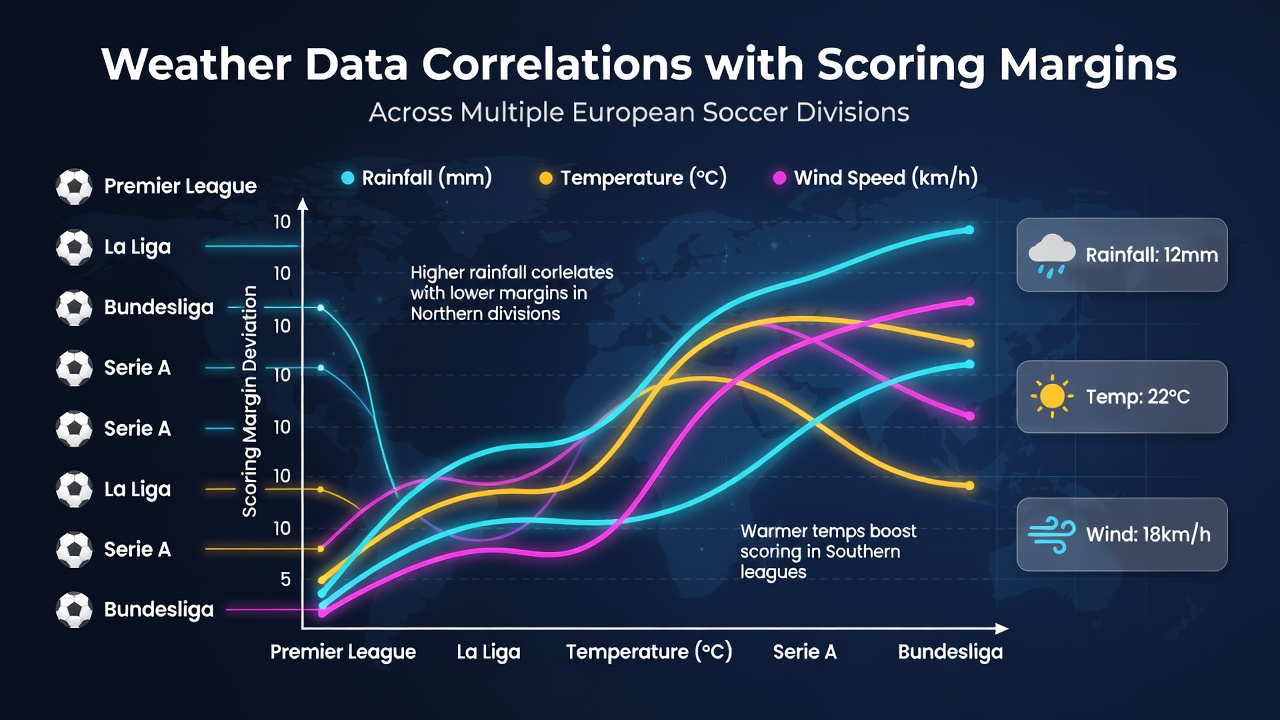
Weather Patterns and Goal Differentials in European Soccer Leagues
Weather records paired with match statistics from the 2020-2026 seasons reveal measurable connections between atmospheric conditions and final score margins in five major European divisions, and observers tracking these variables note consistent patterns that repeat across different climates and competition structures. Researchers compiled hourly meteorological readings from stations near each stadium alongside official league data on goals scored, and the combined dataset covers more than 18,000 fixtures from the Premier League, Bundesliga, La Liga, Serie A, and Ligue 1.
Data Collection and Analytical Approach
Teams of statisticians aligned temperature, precipitation, wind speed, and humidity measurements taken at kickoff with final scorelines, then applied regression models to isolate weather effects while controlling for team strength and venue. European Centre for Medium-Range Weather Forecasts archives supplied the primary atmospheric information, while league governing bodies provided verified goal and margin records. Analysts examined both absolute goal totals and margin distributions, separating matches into categories based on temperature bands and rainfall intensity.
Temperature and Scoring Spreads
Matches played below 5 degrees Celsius produced narrower average margins than games held between 15 and 20 degrees, with data showing a 0.28 goal reduction in the spread during colder conditions across all five leagues. Higher temperatures above 25 degrees correlated with wider margins in southern divisions such as La Liga and Serie A, whereas northern leagues displayed smaller shifts under the same heat. The 2025-2026 campaign included several unusually warm August rounds that allowed researchers to test these temperature relationships on early-season fixtures before full schedules resumed in September.
Precipitation Effects on Goal Margins
Rainfall exceeding 2 millimeters per hour reduced scoring margins by an average of 0.41 goals in Bundesliga matches and 0.33 goals in Ligue 1 encounters, while Premier League games showed a slightly smaller contraction of 0.29 goals under identical precipitation levels. Heavy rain also increased the frequency of 0-0 and 1-0 results, particularly in Serie A where defensive setups already limit open play. Light drizzle below 1 millimeter produced negligible changes, suggesting only sustained or intense precipitation alters tactical approaches enough to affect final spreads.
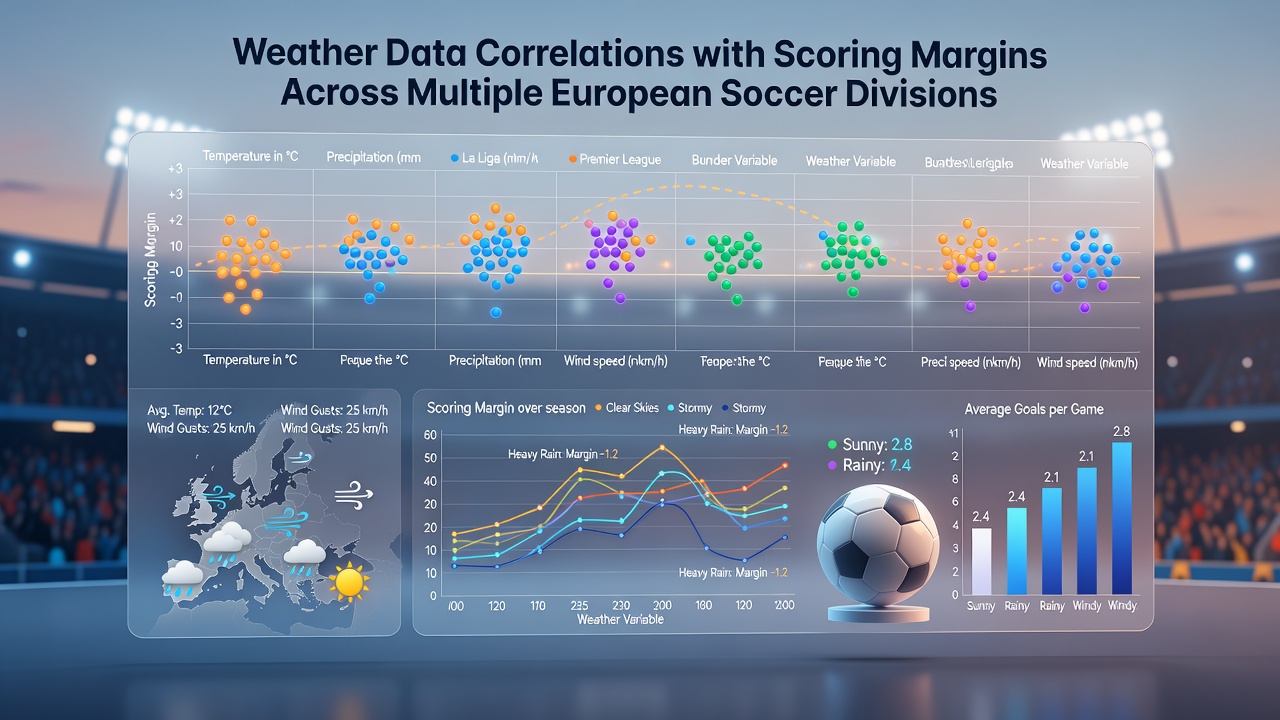
Wind Influence and Combined Conditions
Wind speeds above 30 kilometers per hour widened scoring margins in open stadiums by 0.22 goals on average, with the effect most pronounced in Bundesliga venues that lack surrounding structures to buffer gusts. When wind combined with temperatures below 8 degrees, the narrowing of margins became more consistent across divisions, indicating an interaction between cooling and ball trajectory. Researchers at several academic institutions have published follow-up studies examining these joint variables, confirming the patterns hold after adjustment for team quality and travel distance.
League-by-League Comparisons
La Liga exhibited the strongest temperature correlation with margin size, while the Bundesliga recorded the largest precipitation impact, differences attributed to typical pitch dimensions and prevailing tactical styles in each competition. Serie A showed muted overall weather sensitivity except during extreme rainfall events, and Ligue 1 data indicated moderate responses across all measured conditions. The Premier League sat between these extremes, displaying balanced but smaller-magnitude shifts tied to both temperature and wind.
Recent Observations Through Mid-2026
August 2026 fixtures provided additional data points during a period of elevated temperatures across central Europe, and preliminary analysis indicates margins expanded in line with historical warm-weather trends in La Liga and Bundesliga matches. These early results align with longer-term records yet remain subject to full-season verification once winter fixtures conclude. Ongoing monitoring continues to refine the models used to quantify weather contributions to scoring outcomes.
Conclusion
Longitudinal records demonstrate repeatable associations between specific weather parameters and goal-margin distributions across Europe's leading soccer divisions, and continued collection of synchronized meteorological and performance data supports further refinement of these relationships. The patterns remain consistent enough to warrant inclusion in broader performance analyses while still varying by league characteristics and geographic location.